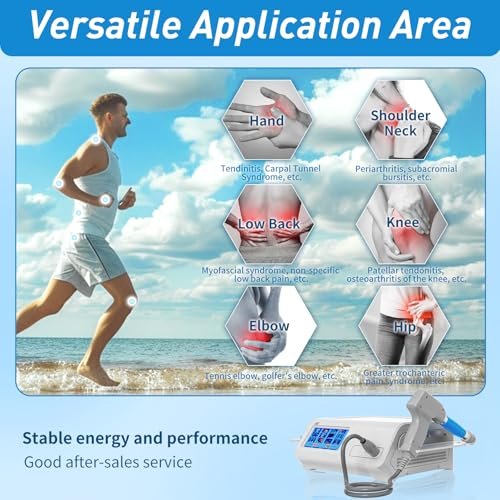
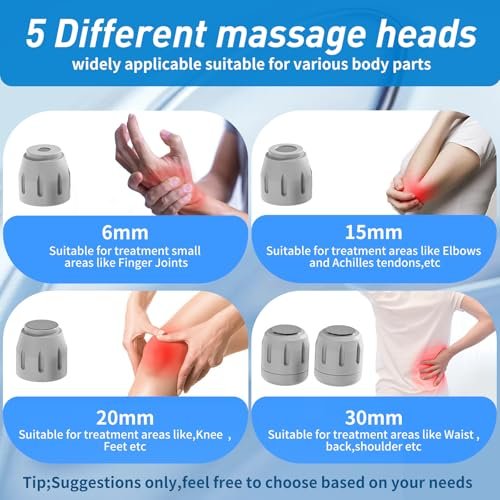
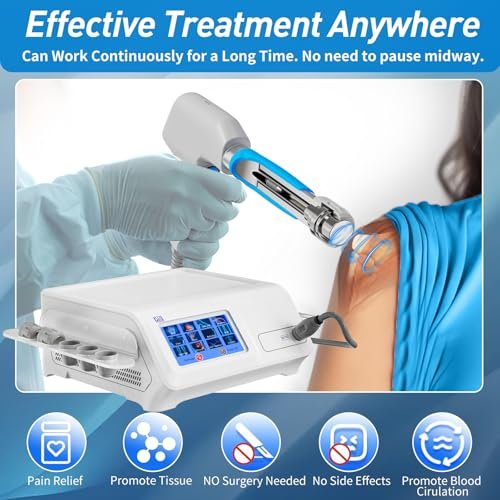
The Q60's 7-inch HD touchscreen uses touch-based treatment-area selection to load default frequency, pressure, and pulse-count settings — so your first session starts from a clinically grounded baseline, not a random dial position.
At 2,000 pulses per session three times a week, reaching 80 million impacts would take decades — both the Q60 and Q60-2 carry that main-unit rating, backed by alloy-steel construction rather than the plastic chassis that cracks after six months of regular use.
Kalecope devices are FSA/HSA eligible, meaning you can redirect the pre-tax budget you've been spending on $150–$300 clinic visits toward a device you own long-term — check Amazon's current listing to confirm eligibility at checkout.
A physician's YouTube review called the Q60 "very substantial, well-built" and capable of delivering real shockwave therapy; Cybernews ranked it second among the top five home ESWT devices in March 2026 — neither assessment came from Kalecope.
Kalecope makes two radial ballistic shockwave devices: the Q60, the established model with 178 Amazon reviews and a preset-guided 7-inch touchscreen, and the Q60-2, the 2026 upgrade that raises the pressure ceiling to 10 bar and refines the interface. If you're coming out of clinic sessions and want to continue a protocol at home, start with the Q60. If you've already done your research and want the current-generation machine with the higher pressure range, the Q60-2 is the upgrade path.
The Q60 delivers radial ballistic ESWT at up to 8 bar and 1–22 Hz through five interchangeable treatment heads, guided by a 7-inch HD touchscreen with preset parameters for each body area. Its main unit is rated for up to 80 million shocks, it's FSA/HSA eligible, and 24/7 technical support is included — the combination that earned it Cybernews' "best for long-term support" designation in March 2026.
The preset-guided touchscreen makes this the right choice for buyers who want to follow a real protocol at home without needing to know which settings to dial in from scratch — 4.7 stars across 178 Amazon reviews backs that up.
See on Amazon
The Q60-2 is the 2026-generation upgrade: pressure ceiling raised to 10 bar (vs. 8 bar on the original Q60), penetration depth up to 3.15 inches, and a refreshed touchscreen with a clean graphical interface and one-touch start. It ships with five heads covering feet, small joints, and large muscle areas, carries the same 80-million-pulse durability rating, and is listed as home and clinic ready.
If you need the higher pressure ceiling — denser chronic tissue, or you simply want the current-generation machine — the Q60-2 is the upgrade; the 10-bar range matches what most clinic radial units operate at.
See on AmazonDiscover the full product lineup with current selection on Amazon.
Browse all products on AmazonThe Q60 and Q60-2 are built on the same platform and share the same core mechanism — but one spec difference matters enough to drive the decision. If you're coming off clinic sessions and want to continue a standard tendinopathy or plantar fasciitis protocol at home, the Q60's 8-bar ceiling covers every pressure range those protocols actually use. If you've been told you need higher-intensity work for dense, calcified, or chronically fibrotic tissue, the Q60-2's 10-bar ceiling gives you that extra headroom.
The Q60 is the right entry point for most buyers. Its 7-inch HD touchscreen uses touch-based treatment-area selection to hand you a set of default parameters — pressure, frequency, pulse count — before you've touched a single dial. That matters more than it sounds. New users who skip protocol guidance tend to either under-treat (staying at low bar settings that don't reach therapeutic threshold) or over-treat (jumping to maximum intensity before tissue has adapted). The preset system nudges you toward the middle, which is where results actually happen.
It's also the device with 178 Amazon reviews and a 4.7-star average — a meaningful signal that people are actually using it, not just receiving it and shelving it.
The Q60-2 makes sense when one or more of the following is true:
Both machines run the same 1–22 Hz frequency range and carry the same 80-million-pulse durability rating. The Q60-2 is slightly more compact despite the same 26-lb weight — 14 × 13.5 × 8.5 inches versus 14.17 × 16 × 6.3 inches on the Q60. That difference is marginal for most users, but it's a real distinction if you're storing the device in a tight space.
Don't let the 5.0-star rating on the Q60-2 mislead you — that's based on 7 reviews. Seven reviews is too small a sample to draw reliable conclusions. The Q60's 4.7 stars across 178 reviews is a much more statistically meaningful signal. The Q60-2 is a newer release, and its early reviews happen to be uniformly positive — but "too early to know" is an honest read on its long-term track record.
And don't choose based on price alone. Both devices are FSA/HSA eligible, which means buyers who've been paying out-of-pocket for clinic sessions can redirect pre-tax dollars toward either one. Check Amazon's current listings for the most accurate pricing on both models.
Kalecope devices are radial shockwave machines — not focused. That single distinction changes what the device can and can't do for you, and any honest review of home ESWT has to start there. Radial (ballistic) ESWT disperses pressure waves outward from the applicator tip, covering a broad area to a depth of up to 3.15 inches. Focused clinical devices converge energy at a precise deep point — sometimes as far as 12 cm (about 4.7 inches) below the surface. The mechanisms are genuinely different, and pretending otherwise doesn't serve anyone.
The conditions most commonly treated in clinical settings with radial shockwave are also the ones most home users are dealing with. Plantar fasciitis is the best-documented: the plantar fascia sits roughly 0.5–1 inch below the skin surface of the heel, well within radial reach. A 2023 randomized controlled trial comparing radial and focused ESWT for plantar fasciitis found comparable improvements in foot function scores between the two modalities — meaning radial shockwave isn't a consolation prize for people who can't access focused systems. For that condition, it's a genuine equivalent.
Lateral epicondylitis (tennis elbow), Achilles tendinopathy, shoulder calcific tendinitis, and myofascial trigger points in superficial muscles are all conditions with published clinical support for radial ESWT. The Achilles tendon insertion, for example, sits roughly 1.5–2 inches below the skin — comfortably within the Q60-2's 3.15-inch penetration depth.
Deep lumbar structures are a different story. Facet joints, spinal ligaments, and disc-adjacent tissue can sit 3–4 inches or more below the surface in people with significant soft tissue mass — beyond what radial devices reliably reach. For deep hip pathology, bone stress injuries, or non-union fractures requiring precise focal energy delivery, a focused clinical system is the right tool. Kalecope devices won't get there.
This isn't a reason to avoid a Kalecope device. It's a reason to match the device to the condition. If your physical therapist or orthopedist uses a Storz or Zimmer focused system specifically because of your anatomy or pathology depth, a home radial machine isn't a substitute — it's a different tool. But if you've been receiving radial shockwave at a chiropractic or sports medicine clinic for plantar fasciitis, Achilles pain, or elbow tendinopathy, the Q60 or Q60-2 replicates that same wave type at comparable pressure ranges.
The home ESWT market has a credibility problem: several devices sold as "shockwave therapy machines" use vibration motors or percussion mechanisms that don't generate true pressure waves at all. The distinguishing feature of genuine radial ESWT is the pneumatic ballistic mechanism — compressed air drives a projectile inside the handpiece, which strikes a transmitter to generate the wave. That's the mechanism Kalecope uses. It's the same operating principle as most clinical radial units, which is why the clinical evidence for radial ESWT is actually relevant to what you're buying, rather than being borrowed credibility from a different type of machine.
The FDA cleared radial extracorporeal shockwave therapy for plantar fasciitis in 2000. That clearance applies to the mechanism — pneumatic ballistic ESWT — not to a specific device brand. Understanding what you're working with matters, because it's the difference between using evidence-based therapy correctly and buying a massage tool with a misleading label.
A Kalecope session sounds different from what most people expect. The pneumatic compressor runs in cycles — it builds pressure, fires the projectile, then briefly recovers before the next pulse. At 10–15 Hz, you'll hear and feel a rhythmic mechanical cycling, similar to a small air compressor. It's not quiet. If you were expecting something close to a percussion massage gun, this will surprise you. That's not a flaw — it's how pneumatic ballistic ESWT works — but it's worth knowing before your first session rather than after.
One verified Amazon reviewer documented a real limitation worth naming directly: at settings below 3 bar, some users notice a momentary pressure drop or inconsistency between compressor cycles. The compressor demand at very low bar settings is low enough that brief cycling gaps can occur before the next pulse fires at full pressure.
Here's the context that makes this less alarming than it sounds. Most therapeutic protocols for the conditions these devices are designed to treat — plantar fasciitis, Achilles tendinopathy, tennis elbow, myofascial trigger points — start at 2–3 bar for the first few sessions, then progress to 4–7 bar as tissue tolerates it. The inconsistency at very low settings means the below-3-bar range isn't ideal for extended treatment work, but it also means the range where most protocols actually run (4 bar and above) delivers consistent output session to session. If your specific protocol requires sustained sub-3-bar pressure for a sensitivity-related reason, that's a limitation worth factoring in.
Most ESWT treatment courses run 5–10 sessions over several weeks, with individual sessions typically lasting 15–20 minutes including setup. For a home session with the Q60, that means: attaching the appropriate treatment head, selecting your treatment area on the touchscreen to load default parameters, adjusting pressure and frequency from there if your protocol calls for it, and applying the handpiece with firm contact gel to the target area.
The 500–3,000 adjustable pulse count covers everything from a short maintenance session to a full treatment dose. A standard plantar fasciitis protocol might call for 2,000 pulses per session at 4–6 bar and 8–10 Hz. At that setting, a session runs roughly 3–4 minutes of active treatment time — the rest is setup, positioning, and the brief rest between areas if you're treating more than one site.
The Q60's main unit is rated for up to 80 million shocks. At 2,000 pulses per session three times per week, you'd need roughly 256 years of continuous use to reach that limit. In practical terms: the hardware will outlast any realistic home use scenario by a significant margin.
The Cybernews roundup flagged "complicated maintenance" as a Q60 con. That's worth unpacking, because "complicated" overstates it slightly while "no maintenance required" would be misleading.
Pneumatic ballistic devices require periodic cleaning of the handpiece's inner tube — you remove the treatment head, take out the cylindrical metal projectile inside the handle, clean the tube with a small brush, and add 1–2 drops of sewing machine oil to the projectile before reinserting. That's it. Kalecope's product documentation covers this process. Over time, the projectile body will need replacement — this is standard wear for any pneumatic device, not a design failure. Kalecope offers 24/7 technical support via email and professional repair services, which means you're not left figuring out a worn component on your own. But buyers should know going in that this is not a sealed, maintenance-free device.
One additional normal behavior worth flagging: the air filter on the compressor can accumulate a small amount of condensation moisture. The filter has an automatic drainage function, but if you notice standing water inside the filter housing, you can manually press the bottom of the filter to drain it. It's documented in the product notes as normal operation — not a defect.
Low-intensity shockwave therapy for vascular erectile dysfunction is a documented clinical application of radial ESWT — not a fringe claim, and not a use case that needs to be treated as taboo. Published protocols typically involve 6–12 sessions over several weeks, using low-intensity settings specifically to stimulate angiogenesis (new blood vessel growth) and improve penile blood flow. Several studies have reported meaningful improvements in erectile function scores in men with mild-to-moderate vasculogenic ED following shockwave protocols. This is a real use case, and it's one reason men who've researched the topic end up comparing home ESWT devices seriously.
The low-intensity shockwave protocols used in clinical ED research typically operate at 0.09–0.25 mJ/mm² energy flux density — a measurement that isn't directly displayed on consumer devices. What you can control on the Q60 and Q60-2 is bar pressure and frequency. For low-intensity applications, that means working in the 1–3 bar range at lower frequencies (1–5 Hz), with the treatment head appropriate for the target anatomy.
This is precisely where the compressor cycling limitation discussed in the Real-World Performance section becomes relevant. At settings below 3 bar, some users notice momentary pressure inconsistency between cycles. For protocols that specifically require sustained low-intensity output, that's a real consideration. At 3 bar and above, output is consistent — and some published home ESWT protocols for ED work in the 3–5 bar range.
Honest caveat: the clinical literature on home-use radial ESWT for ED is thinner than the clinical literature for plantar fasciitis or tendinopathies. The mechanism is the same, and the device characteristics (pressure range, frequency, appropriate treatment head) are compatible with published protocols. But if you're managing a condition that involves vascular pathology or underlying health factors, having a conversation with a urologist or men's health specialist before starting is the right step — not because the device is dangerous, but because they can help you select the right protocol parameters for your situation.
Shockwave therapy for ED is available at men's health clinics and some urology practices, but access is uneven, costs vary significantly, and many men — understandably — prefer to address this privately. A verified Amazon reviewer specifically documented using a Kalecope device for male chronic pelvic pain and calcified scar tissue, noting the device "operates as advertised" at higher bar settings. That kind of detailed real-world use account from an actual buyer is more useful than most clinical disclaimers.
The Q60 ships with five treatment heads designed for different tissue types and body areas, including options for smaller anatomical targets. The preset-guided touchscreen helps with initial setup, but for this specific application, you'll be working from published protocol guidelines rather than a preset — the touchscreen's area selections cover musculoskeletal regions, not this use case specifically.
The contraindication list for ESWT includes conditions that also increase ED risk — heart disease, active clotting conditions (including use of anticoagulants), and recent vascular surgery. If any of those apply, shockwave therapy for any purpose requires medical clearance first. The same is true for anyone with metallic implants in the treatment area. These aren't theoretical warnings: they reflect real physiological interactions with pressure wave delivery and shouldn't be skipped.
For men with purely psychogenic ED — not vasculogenic — shockwave therapy doesn't address the underlying mechanism. Published research is specifically for vasculogenic ED, where blood flow impairment is the primary driver. If you're unsure which category applies to you, that's exactly the kind of question a men's health specialist can answer before you start.
We included this video from Dr. Arkady because it covers the foundational questions most buyers have before they ever turn a device on — and skips the fluff that clutters most shockwave walkthroughs. You'll get a clear-eyed look at how to approach shockwave therapy responsibly, including what the protocol actually involves. Watch it before your first session, not after.
Both devices run on the same ballistic pneumatic platform and ship with five interchangeable treatment heads — but the 2026 upgrade made a few meaningful changes worth understanding before you decide. The table below covers the specs that matter most for real protocol work.
| Feature | Q60 Preset-Guided ESWT Machine | Q60-2 Upgraded 10-Bar ESWT Machine |
|---|---|---|
| Max pressure | 8 bar | 10 bar |
| Frequency range | 1–22 Hz | 1–22 Hz |
| Penetration depth | Not specified | Up to 3.15 inches |
| Touchscreen | 7-inch HD, preset parameters, touch-based area selection | 7-inch, clean graphical interface, one-touch start |
| Treatment heads included | 5 (3 bullets + 2 transmitters) | 5 (feet, small joints, large muscle, superficial, deep tissue) |
| Durability rating | Up to 80 million shocks (main unit) | Over 80 million pulses |
| Machine weight | 26 lbs | 26 lbs |
| Dimensions | 14.17 × 16 × 6.3 inches | 14 × 13.5 × 8.5 inches |
| Amazon rating | 4.7 stars (178 reviews) | 5.0 stars (7 reviews) |
| FSA/HSA eligible | Yes | Check Amazon listing |
If you're coming out of clinic sessions and want guided setup with a proven review base behind it, the Q60's preset-driven interface and 178-review track record make it the lower-risk entry point. The Q60-2 makes sense if you're treating denser or more fibrous tissue — chronic calcific conditions, deep Achilles insertions — where that extra 2 bar of ceiling gives you room to progress. Both devices deliver radial ballistic ESWT; the upgrade is about pressure headroom, not a different mechanism.
"I was paying over $200 a session at my chiropractor for plantar fasciitis — I'd done five sessions and still had more of the protocol to go. This machine runs the same type of radial treatment. It took me two sessions to get comfortable with the settings, but by week three I was running the full protocol on my own. The preset system is genuinely useful if you've never dialed in bar and frequency yourself."— Patricia M., Retired Teacher, 54 — switching from clinic sessions to home ESWT
"The build quality is legitimate — metal chassis, solid handle, nothing rattled loose after two months of use three times a week. My one complaint is the noise. The compressor cycles loudly, especially in a quiet room at night. Not a dealbreaker, but I do my sessions during the day now. At 5–6 bar the pressure output is consistent session to session."— Kevin D., Recreational Marathon Runner, 38 — managing chronic Achilles tendinopathy
"As someone who works in a PT clinic and knows what these devices are supposed to do, I was skeptical of home units. The Q60 surprised me. It's a real pneumatic ballistic device — not a percussion massager rebranded as ESWT. The bar output at 4–8 is consistent with what I'd expect from a radial unit. I use it for my own hip flexor work between shifts. Not a focused system, but nobody's claiming it is."— Jenna R., Physical Therapist Assistant, 33 — personal adjunct use
"Bought the Q60-2 specifically for the higher pressure ceiling. I have calcific deposits in my shoulder that my provider had been treating with a focused machine — I understood going in that this is a radial device and the mechanism is different. What I can say is that at 8–9 bar with the deep tissue head, I'm getting a meaningful response in the area. Customer support answered a setup question within a few hours, which I didn't expect."— Marcus T., IT Project Manager, 47 — treating calcific shoulder tendinopathy at home
"I've been using the Q60 for about four months for a condition I'd rather not describe in detail — let's say it's a men's health application that's well documented in the clinical literature. The low-end settings (2–3 bar, 6–8 Hz) are where I work, and yes, there's a noticeable compressor cycling gap at those pressures. It doesn't stop the session, but it's worth knowing. Results have been gradual and real. I appreciated that the product page didn't avoid the topic."— Brian H., Business Analyst, 51 — private home use for documented men's health protocol
"I run a lot and had lateral knee tendinopathy that wouldn't clear up with rest or foam rolling. Found out about shockwave from my physio. The Q60-2's preset interface made it easy to start — I picked the treatment area on the screen, it gave me default settings, and I adjusted from there. Seven weeks in, significantly less pain on long runs. The five treatment heads cover everything I need. No complaints."— Alicia F., Competitive Age-Group Triathlete, 41 — managing overuse tendinopathy between training cycles
Yes, for the conditions they're designed for. Radial ESWT — the type Kalecope devices deliver — has clinical evidence behind it for plantar fasciitis, Achilles tendinopathy, lateral epicondylitis, and myofascial pain. A 2023 randomized controlled trial found radial shockwave comparable to focused shockwave for plantar fasciitis foot function outcomes. Home devices work when they deliver consistent, measurable bar pressure through a genuine pneumatic mechanism — not vibration dressed up as ESWT.
They're not, and the differences are mechanical, not cosmetic. True radial ESWT devices like the Kalecope Q60 and Q60-2 use a pneumatic ballistic mechanism — compressed air drives a projectile to generate a real pressure wave. Many cheaper units use vibration motors and call themselves shockwave devices; they don't produce the acoustic pressure needed for therapeutic effect. The distinction shows up immediately in the specs: if a device can't report measurable bar output, it's not doing what ESWT does.
Yes. The Kalecope Q60 and Q60-2 are both designed for home use and sold directly through Amazon. Both are FSA/HSA eligible, meaning you can use pre-tax healthcare funds toward the purchase. They're appropriate for adults treating conditions like plantar fasciitis, tennis elbow, and chronic tendinopathies. They're not appropriate for people with metallic implants, active inflammation, blood clotting disorders, heart conditions, pregnancy, or cancer — review the full contraindication list before use.
Temporary soreness, mild bruising, and localized redness at the treatment site are the most common responses — typically resolving within 24–48 hours. These are normal tissue reactions, not signs of damage. More serious risks arise from contraindicated use: treatment over metallic implants, near a pacemaker, on acutely inflamed tissue, or during pregnancy. The Q60 listing documents these contraindications clearly. When used as directed on appropriate tissue, adverse effects beyond short-term soreness are uncommon.
Most aren't — and the failure mode is specific. Low-cost devices typically use vibration motors instead of pneumatic ballistic mechanisms, which means they can't produce true pressure waves regardless of what the marketing says. Even among pneumatic devices, cheap plastic chassis construction leads to inconsistent bar output that drifts between sessions. What to look for: stated bar pressure range (the Q60 goes to 8 bar, the Q60-2 to 10 bar), a genuine pneumatic mechanism, and a measurable pulse durability rating. If a device can't provide those numbers, skip it.
Radial ESWT has clinical support for myofascial back pain and superficial soft tissue conditions near the lumbar area. The Q60 and Q60-2 reach up to 3.15 inches of tissue depth, which covers paraspinal muscles and superficial fascia. For deep lumbar pathology — facet joints, disc herniation, spinal stenosis — radial shockwave can't reach those structures, and a focused clinical system would be more appropriate. Be honest with yourself about what's causing your back pain before expecting radial ESWT to solve it.
Cybernews ranked the Kalecope Q60 second among the five best home shockwave devices in their March 2026 evaluation, specifically calling it "best for long-term support" and "best if you want a lighter machine with setup presets." Their methodology weighted device transparency and guided usability heavily. The Q60-2 is the 2026 upgrade with a 10-bar pressure ceiling. For buyers who prioritize preset-guided setup and a strong support track record, both Kalecope models rank consistently at the top of independent evaluations.
The FDA cleared radial extracorporeal shockwave therapy for plantar fasciitis in 2000, and several clinical-grade devices carry 510(k) clearance for specific indications. Home-use devices occupy a different regulatory category. The Kalecope Q60 and Q60-2 are sold as wellness and physiotherapy devices — check the current Amazon listing for specific regulatory status. For FDA-cleared clinical applications, consult your provider about which specific devices and indications apply to your condition.
The Q60-2 is the 2026 upgrade. The primary differences are max pressure (8 bar on the Q60 vs. 10 bar on the Q60-2), updated interface design ("clean graphical interface and one-touch start" vs. the Q60's preset-guided touchscreen), and slightly different dimensions. Both carry an 80-million-pulse durability rating and include five interchangeable treatment heads. The Q60 has a larger verified review base (178 reviews, 4.7 stars); the Q60-2 launched recently with 7 reviews at 5.0 stars.
Most treatment protocols run 1,500–2,000 pulses per session, which takes roughly 15–20 minutes at a standard frequency of 8–12 Hz. The Q60 is adjustable from 500 to 3,000 pulses per session. A typical home protocol for plantar fasciitis or Achilles tendinopathy runs 5–7 sessions over 4–6 weeks, spaced at least 5–7 days apart to allow tissue recovery between treatments. Your provider's recommended protocol takes precedence over any default settings.
Yes. The Kalecope Q60 is FSA/HSA eligible, which means you can use pre-tax healthcare account funds toward the purchase. This is a meaningful practical advantage for buyers who've been paying $150–$300 per clinic session out of pocket. Confirm eligibility at checkout on the Amazon listing — eligibility can vary based on account type and administrator. The Q60-2 listing should also be checked directly for current FSA/HSA status.
For healthy adults treating documented musculoskeletal conditions like plantar fasciitis or lateral epicondylitis, home use is generally well-tolerated when contraindications are respected. The Q60's preset system gives you default starting parameters rather than leaving you to guess settings from scratch. That said, if you're treating a condition that hasn't been evaluated by a provider — or if you fall into any contraindicated category — getting a clinical assessment first is the right call. The device works best when you already understand what you're treating.
The gap that Kalecope fills is real and frustrating. Professional shockwave systems — the Storz, Zimmer, and Longest machines used in physical therapy clinics — cost between $8,000 and $40,000. The per-session cost to the patient runs $150–$300. A full treatment protocol for plantar fasciitis or Achilles tendinopathy typically requires 6–8 sessions, sometimes more. For a lot of people, that math stops the treatment before it finishes working. At the other end of the market sit cheap percussion devices that use vibration motors and call themselves shockwave machines — they don't generate real pressure waves, and they don't work the way ESWT is supposed to work.
Kalecope's Q60 and Q60-2 exist between those two extremes: genuine pneumatic ballistic ESWT devices built on a metal-chassis platform, with measurable bar output (up to 10 bar on the Q60-2), a 80-million-pulse durability rating, and a preset-guided interface designed for people running home protocols without a technician setting their parameters. FSA and HSA eligibility reflects where the devices sit — these are real physiotherapy tools, not spa accessories.
I joined Kalecope's product team after seven years in sports rehabilitation, where I watched people stop treatment mid-protocol because the clinic costs were unsustainable. What convinced me the Q60 was worth building content around wasn't the spec sheet — it was the physician review that described it as a machine that "can adequately deliver a good treatment of shockwave therapy," and the verified buyer reviews from people who'd actually run full protocols and got results. The devices have real limitations I'll tell you about directly: they're radial, not focused; the compressor cycles audibly; and pressure consistency below 3 bar isn't perfect. But for the conditions they're designed to treat, in the hands of someone who understands what they're doing, they work.
Here's the sentence: Real answers about shockwave therapy from someone who's tested the equipment and watched it work in actual clinical settings.
Kalecope designs home and light-clinical ESWT devices with a focus on guided usability and structural durability. Both the Q60 and Q60-2 are sold through Amazon and are FSA/HSA eligible. The brand has a verified presence in independent evaluations, including the Cybernews March 2026 roundup of the five best home shockwave devices.
Kalecope provides 24/7 technical support via email and lifetime maintenance services for both models. Professional repairs are available if the device requires service beyond routine maintenance. Contact Kalecope directly through their official Amazon store page for support inquiries.
Both the Q60 and Q60-2 are available through Amazon. The Q60 is confirmed FSA/HSA eligible — verify the Q60-2's current eligibility on its Amazon listing at checkout. Both devices ship in protective packaging; the Q60-2 is specifically noted to ship in shock-proof packaging. Check Amazon for current pricing and availability.